Availability:
| SEPT. | OCT. | NOV. | DEC. | JAN. | FEB. | MAR. | APR. | MAY | JUNE | JUL. | AUG. | |
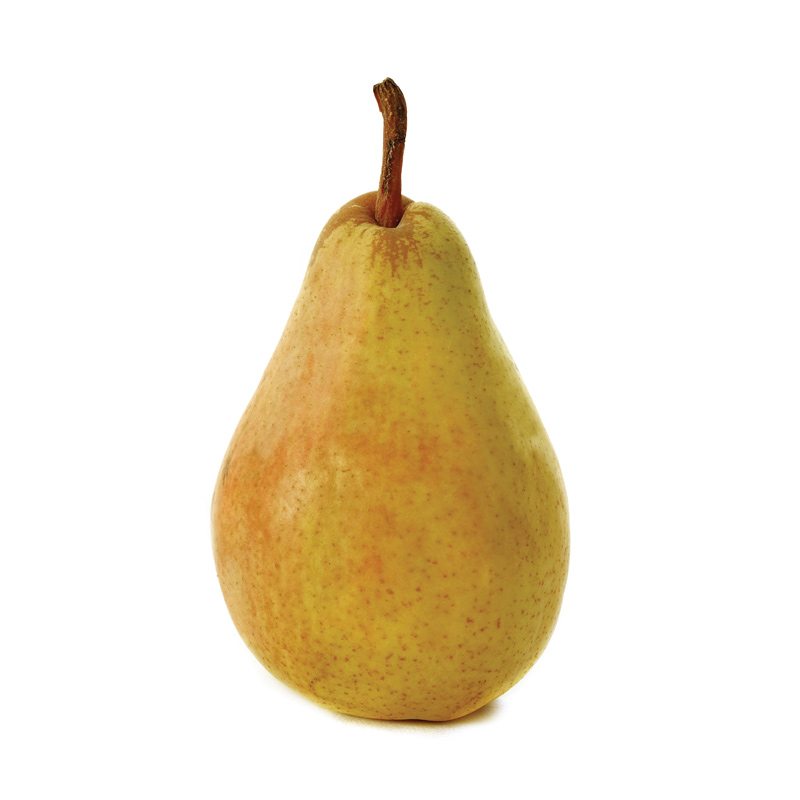
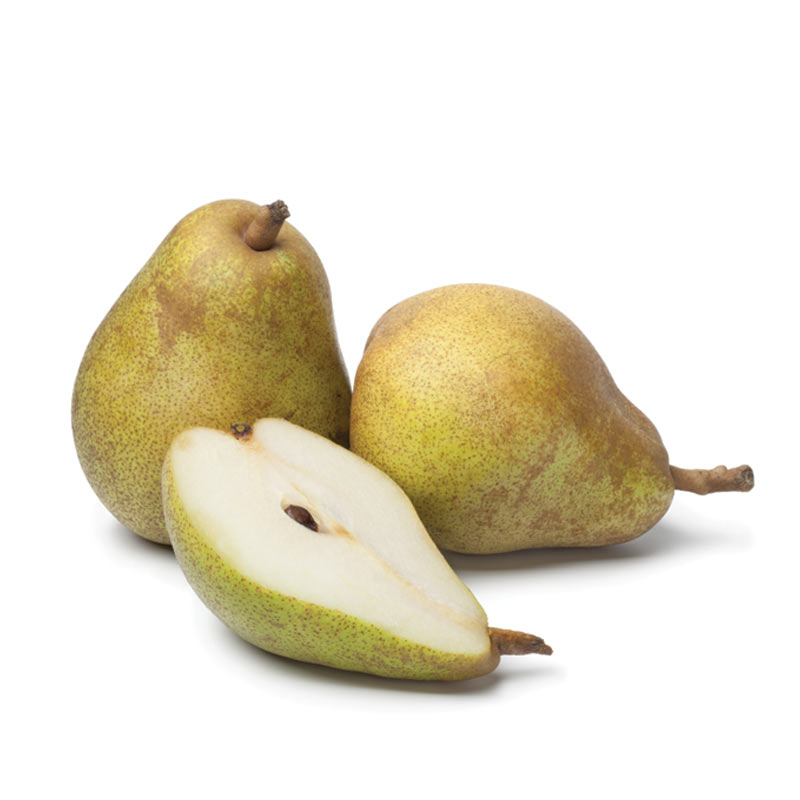
| The Rocha Pear |
Storage Method:
Sizes:
Size 50/60, Size 50/55, Size 55/60, Size 60/65, Size 65/70, Size 70/75.
Production:
The average pear production intended for the French fresh market, excluding processing, is estimated as follows:
In France: 111,557 tonnes [1]
Distributed as follows:
- Provence-Alpes Côte-d’Azur is the leading producing region in France with: 44%,
- Rhône-Alpes: 16%,
- Centre: 9%.
Europe: 2,483,667 tonnes [2]
Portugal is the largest pear producer on a European scale. It is closely followed by Belgium and the Netherlands in second and third place in the ranking. France ranks 6th.
Consumption:
Annual pear consumption in France reaches a peak; it is even the 6th most consumed fruit by the French [3] with an average of 4.7 kg [4] * (according to INSEE, a purchasing household represents 2.3 people).*
[1] French production intended for the fresh market in tonnes: source Agreste – SAA, average 2015-2017
[2] European production in tonnes: source Eurostat, average 2014-16
[3] Kantar Worldpanel – Average 2012-2014
[4] Household purchases (quantities purchased / average household (KILOS)): source Kantar Worldpanel, average 2015-17